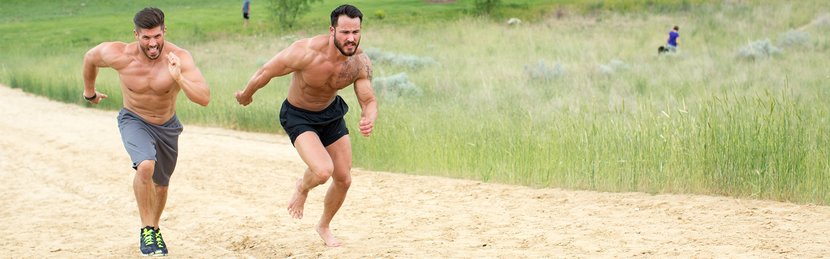
Sprints & Sprinting: Powerful Physique-Shaping For Athletes

When it comes to cutting you up and promoting a nutrient-partitioning milieu conducive to building and maintaining a lean, muscular physique, sprints and sprinting simply cannot be beat. A simple look at competitive athletics demonstrates this pretty clearly.
Part 1 | Part 2
If you were to ask me to pick one form of exercise and say that - for as long as I lived, for the remainder of my days - I could do as much of it as I wanted, whenever I wanted, but could never work out any other way, why, I'd look you right in the face and say "sex."
But then you'd probably say sex doesn't count, and that it's not a valid form of exercise, to which I'd probably reply "oh the hell it ain't," and then we'd probably end up getting into a really long, heated argument about it.
But - as a fictional hypothetical - let's assume you win that dispute, and force me to pick again. Well if that were the case, it wouldn't take me long to reply "sprinting," because'deep down'I'd know I made the right choice.
Of course I'm being slightly facetious, but I think I may have also piqued a few people's interest. Especially those of you who typically scoff at HIIT, run 6-day weight splits, and haven't done cardio since the Presidential Physical Fitness Test's timed mile back in middle school.
Think about it. I, of all people, have one of the most unhealthy, obsessive fixations on being supra-physiologically ripped and cut. "And yet even in spite of this Loki," you ask, "you would be willing to leave the iron behind for all eternity?"
Yup. Because if I knew I could sprint whenever and however it pleased me, I know I'd be juuuuuuust fine - maybe not all that big, but fine (perhaps even "damn-fine").
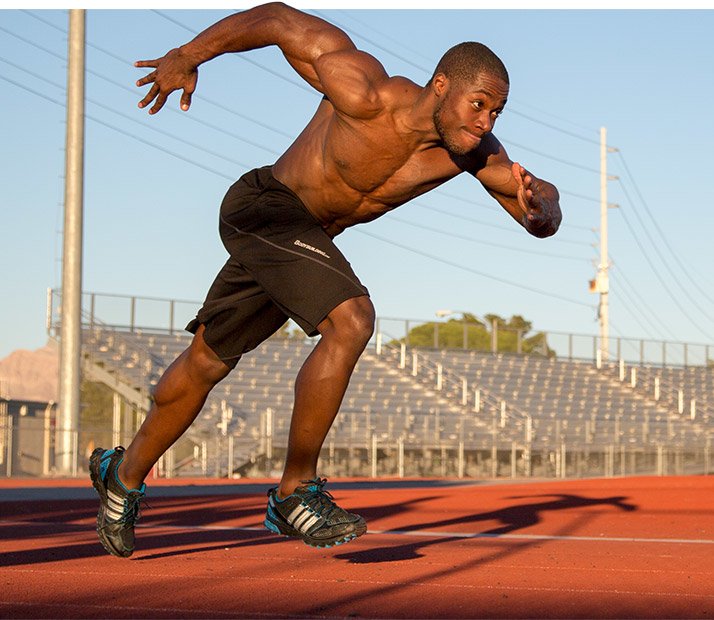
Sprinting: The Courvoisier Of Cardio
When it comes to cutting you up and promoting a nutrient-partitioning milieu conducive to building and maintaining a lean, muscular physique, sprinting simply cannot be beat. A simple look at competitive athletics demonstrates this pretty clearly.
I am NOT even talking about PRO-athletics, a world rife with performance-enhancing-drug use, one-in-a-million-gene-possessing individuals who are able to log hours of gym-time every day while being tended to by a virtual cadre of trainers, coaches, dieticians and sports-specialists.
No, instead just think back to your high-school days (unless you were home-schooled, in which case may someone have mercy on your sad, coddled soul, because you're just going to have to skip a few sentences).
Okay - mild genetic-selectivity aside - who were the most ripped (i.e. lowest amount of bodyfat relative to the amount of lean body mass carried) guys on your football team? The running backs, wide receivers and defensive backs, right? Track team? Jumpers and guys who ran events 400m and shorter. Basketball team guards?
Almost none of the guys or girls whose athletic livelihoods depended on their being able to sprint at maximal or near-maximal speed (causing them to thereby hone their anaerobic threshold in the process) ever had an appreciable amount of bodyfat on their frames during their playing days.
Most folks (while speeding by the track on the way to the weight-room) still mistakenly attribute this phenomenon to simple 'ectomorphism.' Well I, Loki, shall not tolerate it any longer, and that is why I have come to preach the gospel of "going really fast with your feet."
The fact of the matter is, those kids' physiques may have been influenced by 'ectomorphism,' but they were influenced a whole helluva' lot more by "the big A's" when it comes to nutrient-partitioning, fat oxidation and physique-augmentation:
- 5'-AMP-mediated protein kinase (AMPk)
- Acetyl-CoA carboxylase (ACC) and
- ADP : ATP (adenosine di- and tri- phosphate, respectively) cellular ratios.
The fact of the matter is, unless you simply happen to be the most inept Google-user on God's green Earth, if you're reading this article, you care about exercise and how you look. And if you care about either (and hopefully both), then you should make sure you save some room in that split of yours for some sprint work. Because 'booking it big-time' - be it on a track, in a park, in your yard, or from 'the 5-0' - will do more to develop your aesthetic and anaerobic capacities than anything else out there.
Trying to lose fat? You should be sprinting. Trying to gain lean mass? You should be sprinting. Trying to defy conventional established wisdom and be really badass and do both simultaneously in an effort to 'recomp?' Then you damn-sure NEED to be sprinting. And a look at the physiological effects and adaptations elicited by consistent (and possibly even infrequent) sprint-sessions, which I shall now share with you ... will make things abundantly clear.

Getting "Sciency & Shiznit" With Cellular Basics
By now, AMPk has pretty much been discussed to death around these parts. Nonetheless, for those needing a refresher or for anyone else out there who is still having trouble putting together all the pieces of the big picture, I'm going to break it down for you.
But before we get to the current enzymatic "it-kinase" in the world of bodybuilding, let's first lay some groundwork by examining how our (muscular) energy metabolism works during a maximal or near-maximal effort sprint; a scenario which creates a perpetual, unsustainably-intensive demand for anaerobic energy and substrate from start to finish.
Signal From The Brain
Your sprint begins obviously when the little voice in your head communicates to you it's time to move, which tells your muscle cells to begin to rapidly trigger muscle cell activity (contraction) following cellular "excitation."
This is a process linked via the second-messenger signal coming from transferred calcium ions (Ca ++)1. When you begin to run, you may think your legs are just "pushing off." But what's simultaneously (or nearly-simultaneously) occurring in every muscle-fiber that the sprint is going to recruit, is a vast, intricate force-generating process taking place in your sarcomeres.
Myosins & Actins
So we've established that your muscles have received the "run, muffucka'!!!" signal from your brain, and it's time for your sarcomeres to show the goods and begin powering your muscles.
How this actually occurs is via a reaction that incorporates two different types of cellular filaments ('thick' myosins and 'thin' actins) which are going to bind to one other in a process called cross-bridging, where the head of the myosin binds to the actin and the filaments pull across each other1. Movement, tension, force, bingo'your muscles are now open for business.
Yeah, there's more to it. Trust me'if you don't already have it, you should still have a solid enough grasp of the basics to be able to follow me through the rest of the article. In fact, you can start rocking your thinking caps with a trucker-tilt for all I care, because we're about to jump back into familiar territory.
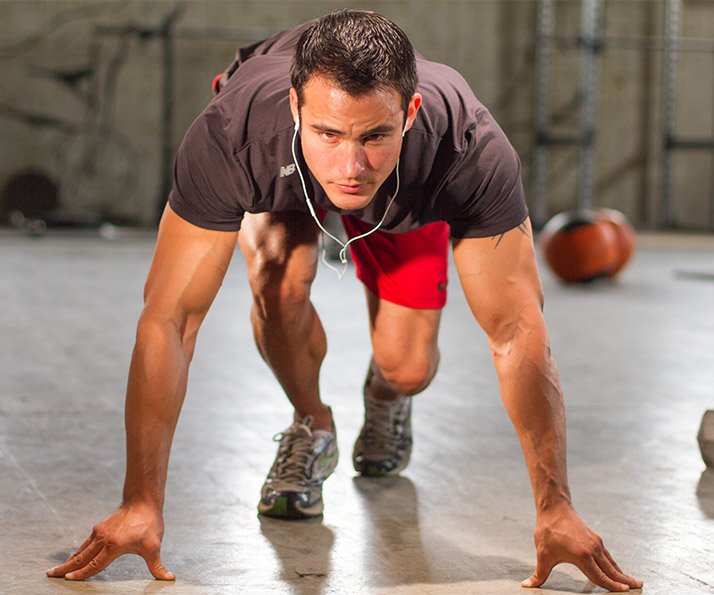
Love Don't Cost a Thing, But Anaerobic Expenditure Sure Does
"Houston, we have cross-bridging." Since each cycle of myosin-actin binding (and subsequent filament 'bump-n'-grind' that follows) involves the hydrolysis (re: breakdown) of one molecule of our good ole' anaerobic fuel-friend ATP (adenosine tri-phosphate), this also now means that we gon' be expending some energy.
As most of you are already aware, hydrolysis is a process that results in the cleaving (off) of a phosphate, which produces ADP+Pi (adenosine di-phosphate and an additional, high-energy 'free' phosphate group)3. Here is another important thing to keep in mind: despite the fact that ATP availability is essentially the rate-limiting factor for muscle contraction, the actual amount of ATP that your muscles naturally store is relatively modest (hence the reason why creatine is such a good training adjunct)3.
It's All About Gettin' AMPed Up
Sprinting, however - due to the extreme nature of the muscular recruitment and activity needed to power it - takes these energy-currency transactions occurring in your muscles even further.
By going from a resting state to full-blown, maximal anaerobic exertion in a mere second or two, the cellular demand for ATP & phosphates skyrockets, not only causing ATP molecules to become hydrolyzed into ADP, but also causing a high number of ADP molecules to become further hydrolyzed into AMP (+Pi ) molecules with only a single phosphate left over4.
Once again, due to the massive "about-face" your system has just undergone, neither glycogen nor oxidative phosphorylation can provide enough phosphates to get you off and sprinting without leaving AMP levels ramped way the hell high.
As a result, the first several seconds of every full-out sprint are going to have a tremendously significant effect on the cellular energy environment in the vast majority of your skeletal muscle, a milieu which your body detects, and (shout out to Charles Darwin) has evolved adaptive response mechanisms.
One of the most critical of these mechanisms, especially when it comes to actually shifting a large portion of the activity in your body involving glucose and fatty-acid metabolism, is AMPk. Aaaaaching!!!
It should hopefully be evident by this point that since AMPk is activated in an intensity-dependent manner in response to increased cellular creatine:phosphocreatine (PCr) and AMP:ATP ratios, in terms of effectively achieving significant and systemic AMPk activation, sprinting really is king of spades.
It's also the adaptive nature of AMPk-activity that makes it such a potent phenotype-augmenting force. While it generally remains inactive as a substrate-source shifter during periods of high intensity exercise due to the spikes and dips in cellular Ph that accompany rapid PCr/ATP turnover, during the post-workout period this little kinase immediately begins to pull every enzymatic trick up its sleeve.
It does this in an attempt to simultaneously replenish, bolster AND protect your muscle cells so they'll be better able to respond to future situations that require similarly high degrees of rapid fuel and substrate turnover7.
If You're Consistently On The Track, You're On Track; It's Just That Simple
It's my firm belief that if your primary motivation for training is to optimize your aesthetic appearance and you're still shirking sprint-work, you're doing yourself and your split a disservice.
Even with all the research that has emerged recently regarding the positive effects of AMPK on GLUT-4 translocation, mitochondrial size and density, and fatty acid metabolism, a large percentage of bodybuilders still cling to the misconceived notion that HIIT is detrimental to anabolism or outright catabolic.
Or that simply lifting regularly will bestow the same adaptive benefits as sprint-work, making it an unnecessary and awkward component to try to fit into a multiple-session per week training split.
But, unless you repeatedly incorporate Olympic lifts, extended drop-sets, incomplete rest intervals, and/or rest-pause sets in the gym, you are simply NOT getting the same immeasurably-positive, adaptive benefits you could be reaping if from HIIT.
"Kansas School-Board Exemption"
But what if you are one of "those" lifters, a 100% pure branded beef barbell buster who can stay classically-chiseled like Adonis just doing swiss-ball crunches, and yet still insist on bracketing strip-set power snatches with power cleans? Okay, fair enough. If that's the case, I'm willing to grant you the ever-coveted "Kansas school-board exemption," so you can ignore my dangerous thinking.
Reconsider Your Stance
HOWEVER, for all you who have chosen to remain card-carrying members of the HIIT Haters Club because "Siff never really mentioned sprinting," I strongly urge you to reconsider your stance. If not from the substrate usage-shifting angle, perhaps you should reconsider it from a simple volume and recovery one.
Yeah, I admit: I'm biased. I was a track kid in high-school. In fact, track is the sport that got me lifting weights to begin with. As a result, sprinting and strength-training have long remained closely-linked in my mind. Now, my hope is that I can forge a similar sort of associative intimacy in yours.
Try as you might, unless your God-given physical and neural recovery abilities far exceed that of 99.9% of healthy, fit individuals or you're willing to perpetually run massive doses of steroidal and non-steroidal supplemental ancillaries, you really should only be doing 3-4 strength-training sessions per week (note: there are exceptions to this of course, but as a subjective generalization I find that this contention holds up quite well in vivo).
Too much more volume than that and chances are, you're unnecessarily taxing your CNS'if not your basic energy and recovery reserve themselves. And it's here where I feel HIIT really shines, because sprint-workouts can be added to a three/four day split to augment anabolism and nutrient partitioning without leaving a trainee overly drained or unable to recover in between workouts (assuming proper pre- and post-workout nutritional principles are adhered to, of course).
Sprinting likely has the potential to induce enough mild muscular-hypertrophy across nearly all lower and upper-body muscle-groups that "provided one is in a state of positive energy-balance". It can further stimulate skeletal muscular anabolism without overly (and adversely) influencing mTOR-mediated protein synthesis or creating the same type of DOMS after-effects that most conventional weight-oriented hypertrophy programs will8.
Numerous Boons
And all these numerous boons can be reaped from a workout that need not span any more than 20-or-30 minutes - most of which will be taken up by low-impact, low-exertion recovery intervals in between sprints.
Finally, sprinting is also tremendously effective at simultaneously improving one's aerobic and anaerobic cardiovascular (to differing degrees, depending on the type of sprint(s) used and format of the workout) capacities.
This may also be able to improve weight-workout performance by increasing a trainee's respiratory VO2 uptake (and subsequent ability of his/her mitochondria to draw in greater amounts of oxygen on the cellular level) during periods of exertion. This in turn enables his/her muscles to work more efficiently even in the face of high blood lactate (re: acidic) levels9,10.
Let The Laundry-Listing Of Benefits Begin!
I know I dragged you through a lot just now, and I apologize. Nonetheless, all of this only goes to show just how silly-useful HIIT training can be for the bodybuilder, especially when you consider the fact that even my overly-verbose ass and sesquipedalian semantics can't adequately summarize all the positive effects of sprinting even when given several pages to do so.
So, without further adieu here's how sprinting will definitively aid your bodybuilding and athletic efforts:
Enchanced Maximal Sprint-Peak Power
Harmer et al. demonstrated that seven weeks of sprint training (3 sessions per/week) enhanced maximal sprint-peak power, lengthened time to exhaustion at maximal sprint-exertion, lowered blood-pressure, and increased incremental VO2 peak during exertion in healthy male subjects as a result of increased glycolytic and oxidative enzyme activity11.
Augmented Glycogen Storage Potential
Sprint-training directly augments full-body glycogen storage-potential via cellular and enzymatic mechanisms while increasing GLUT4 translocation (and subsequently insulin-stimulated glucose transport) in large systems of both lower and upper-body skeletal muscle12,13.
In addition, repeated bouts of sprint-like exertion will generate higher levels of nuclear respiratory factor-1 (NRF-1) synthesis in muscle too14.
All told, sprint-training literally makes you more carb-sensitive in regard to your daily glucose intake, ensuring that more of carbs will be partitioned and stored in your muscles.
NRF-1 Binding Activity Increased
Sprinting is likely the single most effective form of exercise in terms of increasing NRF-1 binding activity in skeletal muscle 5, 6, 14, and 15. What's so great about NRF-1 (or maybe it's just "what the hell is NRF-1")? Allow me to explain then. Essentially, NRF-1 is a transcription factor protein that acts on nuclear genes by encoding respiratory subunits and creating components of the cellular machinery that actually transcribe and replicate mitochondria14, 15.
NRF-1, in conjunction with NRF-2 and peroxisome proliferator activated receptor co-activator 1alpha (PCG-1) basically work together to provide your muscles with the stimuli for adaptive cellular overhauls in response to exercise by promoting mitochondrial biogenesis so that your skeletal muscle contains not only more mitochondria, but also larger mitochondria16.
This obviously has tremendous ramifications for nutrient partitioning. First and foremost is the fact that larger mitochondrial surface area means more CPT availability. Another is that increased PCG-1 activity means that PPAR activation in the peroxisomes is also being positively augmented17.
Fat Oxidation
Hopefully, even those of you with no intellectual ambitions when it comes to cellular biology can see from the above that sprint-training has tremendously positive ramifications for fat-burning, both directly and indirectly.
For one, AMPk activation promotes fatty-acid oxidation by inhibiting acetyl-CoA carboxylase (ACC) levels which is a key enzymatic player when it comes to synthesizing malonyl-CoA, the coenzyme which deactivates CPT in the mitochondria18,19,20. So through sprint-training, we basically create a metabolic scenario allowing us to "run the gamut" on fat-oxidation.
We activate AMPk to reduce ACC activity in order to naturally optimize CPT-assisted mitochondrial FFA-oxidation as best we can, while simultaneously stimulating mitochondrial biogenesis, which gives us more mitochondria with more CPT to work with, allowing for an even greater rate of FFA-oxidation. But wait, it gets even better.
As I just mentioned, sprinting also provides us with that spike in PCG-1 activity which "although relatively transient" will further potentiate glucose and FFA oxidation in the peroxisomes17.
Curtail Propensity For Fat-Storage
At the same time, it is highly probable that sprinting-evoked, systemic AMPk activation simultaneously curtails an individual's natural genetic propensity for fat-storage as well. This is because, in response to the rapid ATP-depletion prompted by those repeated, maximal-intensity bouts of anaerobic expenditure, AMPk also works to curtail Acyl-coenzyme A: diacylglycerol acyltransferase (DGAT1) activity and glucose uptake into adipocytes.
This saves ATP for energy repletion rather than having it "misallocated" to synthesize new triacylglycerol (TAG) in your adipocytes21, 22, 23. I desperately want to write something witty here, but - to be perfectly honest - the above dynamic still strikes me as so miraculous that it generally tends to leave me at a loss for words whenever I go back and re-conceptualize it. But, trust me, it's "pretty good" to have this going on, which just goes to show how potent a physique-shaping force sprinting can be when it comes to furthering your bodybuilding goals.
Conclusion
Unfortunately, due to space constraints, that's going to have to do it for this installment of sprinting examined "Avant-style." In next issue's Part II, I'll be returning to take a look at sprint technique and methodology, different strategies for incorporating sprint-work into your lifting split, and also harkening on emerging aesthetic trends in the realm of contemporary bonsai-gardening.
Or maybe I'll just throw in a few supplement recommendations. I don't know; I'm still a little undecided on that last part. But until then, I'm off to the races, off with the hope that you'll all soon follow.
Part 1 | Part 2
References
- The Molecular Biology of the Cell, 3rd edition, © 1994 by Bruce Alberts, Dennis Bray, Julian Lewis, Martin Raff, Keith Roberts, and James D. Watson
- The Cell: A Molecular Approach, 2nd edition, © 2000 by Geoffrey M. Cooper
- Exercise Physiology: Energy Supply for Muscle, 1996-2004. The Nicholas Institute of Sports Medicine and Athletic Trauma
- Peter v. Sengbusch, ATP and Other Nucleoside Triphosphates. (2003)
- Aschenbach W.G., Sakamoto K., Goodyear L.J. 5 Adenosine Monophosphate-Activated Protein Kinase, Metabolism and Exercise. Sports Medicine, vol. 34, no. 2. (2004), pg. 91-113.
- Wojtaszewski JF, Nielsen P, Hansen BF, Richter EA, Kiens B. Isoform-specific and exercise intensity-dependent activation of 5'-AMP-activated protein kinase in human skeletal muscle. J Physiol. 2000 Oct 1;528 Pt 1:221-6.
- Gollob M.H. Glycogen storage disease as a unifying mechanism of disease in the PRKAG2 cardiac syndrome. Biochem. Soc. Trans. (2001) 31, (228'231)
- Naoki Kimura, Chiharu Tokunaga, Sushila Dalal, Christine Richardson, Ken-ichi Yoshino, Kenta Hara, Bruce E. Kemp, Lee A. Witters, Osamu Mimura and Kazuyoshi Yonezawa. A possible linkage between AMP-activated protein kinase (AMPK) and mammalian target of rapamycin (mTOR) signalling pathway. J. Biol. Chem. Volume 8, Issue 1 (January 2003) Page 65
- Nokes T. The Lore of Running. Third Edition, Oxford University Press. 1992. pg. 32-75
- Jacobs, I., M. Esbrnsson, C. Sylvan, I. Holm, and E. Jansson. Sprint training effects on muscle myoglobin, enzymes, fiber types, and blood lactate. Med. Sci. Sports Exerc. 19: 368-374, 1987.
- Harmer, A. R., McKenna, M. J., Sutton, J. R., Snow, R. J., Ruell, P. A., Booth, J., Thompson, M. W., Mackay, N. A., Stathis, C. G., Crameri, R. M., Carey, M. F. & Eager, D. M. Skeletal muscle metabolic and ionic adaptations during intense exercise following sprint training in humans. J. Appl. Physiol. (2000), 89: 1793-1803.
- MacDougall, J. D., G. R. Ward, J. R. Sutton, and D. G. Sale. Muscle glycogen repletion following high-intensity intermittent exercise. J. Appl. Physiol. 42: 129-132, 1977
- Holmes BF, Kurth-Kraczek EJ, Winder WW. Chronic activation of 5'-AMP-activated protein kinase increases GLUT-4, hexokinase, and glycogen in muscle. J. Appl Physiol.. 1999 Nov;87(5):1990-5.
- Baar K, Song Z, Semenkovich CF, Jones TE, Han DH, Nolte LA, Ojuka EO, Chen M, Holloszy JO. Skeletal muscle overexpression of nuclear respiratory factor 1 increases glucose transport capacity. FASEB J. 2003 Sep;17(12):1666-73.
- Bergeron R, Ren JM, Cadman KS, Moore IK, Perret P, Pypaert M, Young LH, Semenkovich CF, Shulman GI. Chronic activation of AMP kinase results in NRF-1 activation and mitochondrial biogenesis. Am. J. Physiol Endocrinol Metab. 2001 Dec;281(6):E1340-6.
- Baar K, Wende AR, Jones TE, Marison M, Nolte LA, Chen M, Kelly DP, Holloszy JO. Adaptations of skeletal muscle to exercise: rapid increase in the transcriptional coactivator PGC-1. FASEB J. 2002 Dec;16(14):1879-86.
- Pilegaard H, Saltin B, Neufer PD. Exercise induces transient transcriptional activation of the PGC-1alpha gene in human skeletal muscle. J. Physiol. 2003 Feb 1;546(Pt 3):851-8.
- Rasmussen B. et al. Malonyl coenzyme A and the regulation of functional carnitine palmitoyltransferase-1 activity and fat oxidation in human skeletal muscle. J. Clin. Invest. 2002 December 1; 110 (11): 1687'1693.
- Park SH, Gammon SR, Knippers JD, Paulsen SR, Rubink DS, Winder WW. Phosphorylation-activity relationships of AMPK and acetyl-CoA carboxylase in muscle. J. Appl. Physiol. 2002 Jun; 92(6):2475-82.
- Chen ZP, McConell GK, Michell BJ, Snow RJ, Canny BJ, Kemp BE. AMPK signaling in contracting human skeletal muscle: acetyl-CoA carboxylase and NO synthase phosphorylation. Am. J. Physiol. Endocrinol. Metab. 2000 Nov;279(5):E1202-6.
- Hardie DG, Pan DA. Regulation of fatty acid synthesis and oxidation by the AMP-activated protein kinase. Biochem Soc Trans. 2002 Nov; 30(Pt 6):1064-70.